Knowledge Hub

Learn about QA trends, testing strategies, and product improvements — with insights designed to help teams stay ahead of industry changes.

Ah. Nothing to see here… yet

It may be coming soon, but for now, try refining your search

Thank you! Your submission has been received!
Oops! Something went wrong while submitting the form.
Testing guide

Test Plan vs Test Case: What’s the Difference?

Learn the key differences between a test plan and a test case and when to use them. This practical guide breaks down components and best practices.

October 18, 2025

8

min

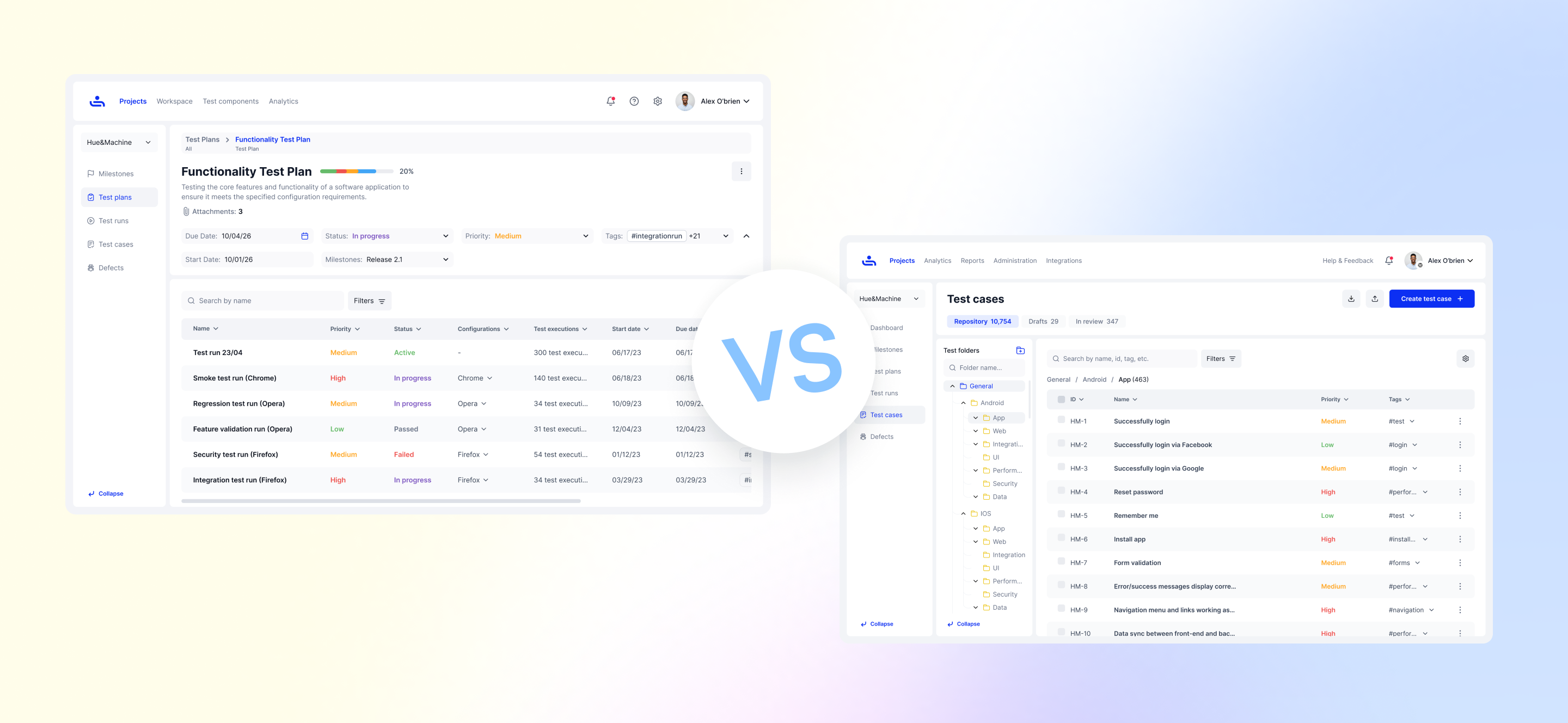
In software testing, test plans and test cases are both essential, but they serve very different purposes. A test plan maps out the big picture, what you're testing, why, and how, while a test case focuses on the specific steps needed to validate individual features. Mixing them up can lead to confusion, wasted effort, and gaps in test coverage. 

This guide will walk you through the key differences between these two documents, their components, and practical examples to help you use each one effectively.

What Is a Test Plan?

A test plan is a high-level document that outlines the overall testing strategy for a project or release. It defines the scope of testing, the approach the team will take, the resources involved, and the timeline for execution. The purpose of a test plan is to guide the entire QA process from start to finish, making sure everyone on the team understands the scope, objectives, and responsibilities before any actual testing begins.

A well-written test plan keeps the QA team aligned with project goals. It acts as a roadmap in your test case management that helps the teams avoid scope creep and manage risk. A test plan helps ensure that no critical functionality gets overlooked during the testing cycle.

What Does a Test Plan Include?

A test plan documents the key information needed to execute testing effectively. It covers the testing scope, approach, team responsibilities, and potential risks. Each component serves a specific purpose in keeping the QA process organized and focused.

Scope

The scope defines which features, modules, and functionalities are included in the testing effort and which are excluded from the current cycle. It sets clear boundaries to keep the team focused and prevents confusion about priorities. 

Objectives

Objectives state the specific goals the testing effort aims to achieve. This includes testing core functionality, verifying bug fixes, and confirming that the software meets defined quality standards. Clear objectives help the team prioritize and measure whether testing was successful.

Test Strategy

The test strategy explains the overall approach to testing the software. It covers the types of testing that will be performed (functional, regression, performance, or security), whether tests will be manual or automated, and how execution will be handled across different environments.

Resources

Resources identify the team members involved in testing and the tools required for execution. These include QA engineers, test environments, automation frameworks, and any third-party tools that might be needed to support the effort. Documentation of resources helps with proper resource allocation and surfaces any gaps before testing. 

Environment Details

Environment details specify the testing infrastructure, including hardware, operating systems, browsers, databases, and network configurations. These details confirm that tests run in conditions that closely match production, leading to more accurate results and fewer issues after release.

Schedule

The schedule outlines the timeline for testing, including start and end dates, milestones, and deadlines for different test phases. A realistic schedule gives the team enough time to test thoroughly and provides stakeholders with visibility into when testing will be complete.

Risk Management

Risk management identifies potential issues that could impact testing or product quality. This might include tight deadlines, limited resources, or unstable areas of the application. Identifying risks early enables the team to plan effective mitigation strategies and prioritize critical areas for additional coverage.

Best Practices to Create a Test Plan

A strong test plan provides clear direction without unnecessary complexity. It doesn't have to be lengthy or overly detailed; it just needs to be clear and actionable. Here are the key practices that keep test plans effective and relevant.

Keep the Test Plan Concise

Focus on essential information that guides execution and decision making, including scope, strategy, resources, timelines, and risks. Long test plans are rarely read or maintained, defeating the purpose of a test plan. Keep the plan concise so it stays relevant and gets referenced throughout the testing cycle. 

Align the Test Plan with Requirements

The test plan should clearly include project requirements and acceptance criteria. Review user stories, specifications, and business goals to confirm that your testing scope covers the right functionality. Misalignment leads to testing the wrong features or missing critical areas. Regular alignment with product managers and developers keeps the plan grounded in actual project needs.

Identify Risks Early

Identify potential problems before testing begins so the team can prepare accordingly. Common risks include tight deadlines, complex integrations, external dependencies, or unstable features. Calling out risks allows the team to allocate extra coverage, adjust timelines, and prepare backup plans.

Keep the Test Plan Flexible

Focus on high-level strategy. Instead of including rigid details, build flexibility into the test plan. Treat the test plan as a living document that gets updated as requirements, priorities, or lessons learned change during testing. A flexible plan adapts to change and stays useful throughout the release cycle.

What Is a Test Case?

A test case is a set of conditions, steps, and expected results used to validate that a specific feature works correctly. It provides clear instructions that testers follow to check whether the software produces the expected result. Test cases are designed to be repeatable so any team member can execute them consistently. Their purpose is to verify functionality, catch defects, and provide a clear record of test execution and outcomes.

What Does a Test Case Include?

A well-structured test case includes key elements that make it easy to execute, understand, and track. Each component serves a specific purpose, and documenting them consistently helps keep the QA process organized. This ensures that any team member can run the tests with clarity and without confusion.

Test Case ID

The test case ID is a unique identifier assigned to each test case. It helps teams organize, reference, and track tests in large suites. A clear ID structure makes it easy to locate specific tests, link them to requirements, and report results. 

Test Title

The test title provides a clear description of what the test validates. A good title is specific and action-oriented, making the test's purpose immediately obvious. For example, "Verify login with valid credentials" is better than "Login test" because it states exactly what's being checked. Clear titles make test suites easier to navigate and help teams find relevant tests quickly.

Preconditions

Preconditions define the setup required before executing the test. This includes user permissions, system states, required data, or specific configurations. Documenting preconditions prevents test failures caused by improper setup and maintains consistent results across test runs.

Test Steps

Test steps are the specific actions a tester performs to execute the test. Each step should be clear, sequential, and easy to follow without prior context. Steps focus on user actions rather than technical details, making them easier to understand and maintain. 

Expected Results

Expected results define what should happen when the test steps are executed correctly. They provide the benchmark for pass or fail decisions. Each expected result should be specific and measurable. Clear expected results make it easy to identify defects during execution.

Test Data

Test data includes the specific inputs and values used during execution. This might include usernames, passwords, sample files, or database records. Documenting test data ensures tests can be repeated accurately and helps testers prepare their environment.

Best Practices to Create a Test Case

Writing effective test cases requires clarity, focus, and consistency. A well-written test case should be easy to understand, simple to execute, and provide clear pass or fail criteria. Following proven practices helps teams create test cases that improve coverage, reduce execution time, and make maintenance easier as the software evolves.

Write Clear and Specific Steps

Each test step should describe a single action in simple, direct language. Clear steps eliminate confusion during execution and ensure different testers get the same results. The goal is for anyone on the team to execute the test without needing additional context or clarification.

Keep One Objective Per Test Case

Each test case should validate a single functionality or scenario. Testing multiple objectives in one case makes it harder to identify what failed when a test doesn't pass. Keeping tests separate also makes it easier to track coverage and rerun specific scenarios without running extra, unrelated steps.

Use Reusable Components for Common Steps

Many test cases share common actions like logging in, navigating to a page, or setting up data. Creating reusable steps or components for these repeated actions saves time and reduces duplication. When a shared step needs updating, you only change it once instead of editing dozens of individual test cases.

Define Clear Expected Results

Expected results should be specific and measurable, not subjective statements. Clear expected results eliminate guesswork and make it easy to determine pass or fail during execution. They also help catch edge cases where the software technically works but doesn't meet actual requirements.

Review and Update Test Cases Regularly

Test cases become outdated as features change, bugs get fixed, and new functionality gets added. Schedule regular reviews to remove obsolete tests, update steps that no longer match the current software, and add coverage for new scenarios.

Core Differences Between a Test Plan and a Test Case

While test plans and test cases are both critical to the QA process, they serve completely different purposes and operate at different levels of detail. A test plan provides the strategic direction for the entire testing effort, while test cases focus on validating specific functionality. Understanding these differences helps teams use each document effectively and avoid confusion about what information belongs where.

Aspect

Test Plan

Test Case

Purpose

Defines the overall testing strategy, scope, and approach for a project or release.

Validates that a specific feature or functionality works as expected.

Scope

Covers the entire testing effort, including what will be tested, resources, timelines, and risks.

Focuses on a single scenario or functionality in the broader scope.

Level of Detail

High-level and strategic, outlining approach and objectives.

Detailed and specific, providing step-by-step instructions for execution.

Audience

Project managers, stakeholders, QA leads, and development teams.

QA testers and engineers.

When It's Created

Early in the project, before testing begins.

After the test plan is defined and the requirements are clear.

Content

Scope, objectives, strategy, resources, schedule, environment details, and risk management.

Test case ID, title, preconditions, test steps, expected results, and test data.

Frequency of Updates

Updated periodically as project scope or strategy changes.

Updated frequently as features change or bugs are fixed.

Outcome

Provides direction and clarifies what to test and how to approach it.

Produces pass or fail results that indicate whether specific functionality works correctly.

Managing Test Plans and Test Cases With TestFiesta Test Management Tool

The challenges outlined in this guide, keeping test plans aligned with changing requirements, avoiding duplicated test steps, and maintaining test cases as features evolve, become easier to manage with the right tool. TestFiesta addresses these pain points by supporting both test plans and test cases in a single flexible platform that adapts to how your team actually works.

  • Shared steps for efficiency – Create reusable actions once, and when you update the shared step, those changes sync across all related test cases, reducing repetitive manual edits.
  • Dynamic organization with tags – Categorize and filter tests by priority, test type, or custom criteria without being locked into static folder structures. 
  • Custom fields for project-specific needs – Add fields that matter to your workflow, from compliance requirements to environment details.
  • Adaptable workflows – Build testing processes that match how your team actually works, not how a tool forces you to work.

Conclusion

Understanding the difference between test plans and test cases is fundamental to running an effective QA process. A test plan sets the strategic direction for your testing effort, while test cases validate that individual features work as expected. Using both documents correctly helps teams maintain clear test coverage, avoid wasted effort, and catch issues before they reach production. When your test plans stay aligned with project goals and your test cases remain focused and maintainable, testing becomes more efficient and reliable. 

Ready to streamline how you manage both? Sign up for a free Testfiesta account and see how flexible test management makes a difference.

FAQs

What Is a Test Plan and Why Is It Important?

A test plan is a high-level document that outlines the testing strategy, scope, resources, and timeline for a project or release. It's important because it provides direction and alignment for the entire QA team before testing begins. Without a test plan, teams risk testing the wrong features, missing critical functionality, or wasting time on unclear priorities.

What Is the Difference Between Test Cases and Test Plans?

Test plans define the overall testing strategy and approach for a project, while test cases provide specific steps to validate individual features. A test plan focuses on the big picture, the scope, objectives, resources, timeline, and risks involved in the testing effort. Test cases focus on execution, the exact steps a tester follows, the expected results, and the data needed to verify specific functionality.

Who Uses Test Plans vs Test Cases?

Test plans are used by QA leads, project managers, stakeholders, and development teams to understand the overall testing strategy and align on scope and timelines. Test cases are used primarily by QA testers and engineers who execute the actual testing. While test plans provide direction for decision-makers, test cases provide the detailed instructions that testers follow during execution.

What Is the Difference Between a Test Plan and Test Design?

A test plan outlines the overall testing strategy, scope, and approach for a project, while test design focuses on how specific tests will be structured and what scenarios will be covered. Test design happens after the test plan is defined and involves identifying test conditions, creating test scenarios, and determining the test data needed. 

Are Test Plans and Test Cases Both Used in a Single Project?

Yes, test plans and test cases are both used in a single project and complement each other throughout the testing process. The test plan is created first to establish the overall strategy and scope, and then test cases are written to execute that strategy. 

Testing guide

What Is Test Case Management: Full Guide + Benefits & Steps

From the minute you start writing software, you start testing it. Good code goes to waste if it doesn't fulfill its intended purpose. Even a “hello, world” needs testing to make sure that it does its job. As your software grows in complexity and gets deeper, your testing must keep up. That's where test case management comes in. In this detailed guide, we'll dive into what test case management is, what it looks like in practice, and how to choose the right tool that makes things easier on the testing side.

October 18, 2025

8

min

From the minute you start writing software, you start testing it. Good code goes to waste if it doesn't fulfill its intended purpose. Even a “hello, world” needs testing to make sure that it does its job. As your software grows in complexity and gets deeper, your testing must keep up. That's where test case management comes in. In this detailed guide, we'll dive into what test case management is, what it looks like in practice, and how to choose the right tool that makes things easier on the testing side.

What Is Test Case Management

Test case management is the practice of creating, organizing, and maintaining test cases throughout the software development lifecycle. It includes writing test cases based on software requirements, grouping them into test suites, executing them across different releases, and tracking results over time. This practice keeps all your testing organized in one place. Instead of hunting through different cases manually, your team can instantly see what needs to be checked and what's already been verified. As your product evolves, your testing dashboard stays updated and accessible to everyone who needs it.

What Is a Test Case Management System

A test case management system is a platform that facilitates your test management. It’s designed to create, execute, and monitor test cases in real-time, providing a centralized workspace for QA teams to prepare the software for deployment. Good test management platforms work alongside the tools your team uses every day. Using a test management system, teams can create, organize, assign, and execute large amounts of test cases with ease. And when something breaks during testing, you can flag it immediately without jumping between tools or re-typing details. At the end of the day, you can log in and out of this tool, and all your testing progress remains in the same place.

How Does Test Case Management Work

Rigorous testing translates into fully-functional software products. This is especially true if you have a layered product with extensive usability, which calls for creating and managing test cases without any hindrance. Here’s how it works in practice:

Define Requirements

Test case management begins with a thorough understanding of what you're building. During this phase, QA teams collaborate with product owners, developers, and stakeholders to gather functional specifications, user stories, acceptance criteria, and technical documentation. Think of this phase as a foundation to a multi-story building; you want to make it as strong as possible. Without clear requirements, testing becomes guesswork, which is never a good call. 

Create Test Cases

Image alt text: Screenshot of TestFiesta test management application – create a test case.

Once requirements are clear, testers  write structured test cases that explain exactly how to verify each feature. A solid test case includes:

  • Preconditions (what needs to be ready first)
  • Step-by-step instructions
  • Expected results
  • Any necessary test data

These cases should cover everything from “happy path” scenarios where users do everything right, as well as negative testing for error handling, edge cases with unexpected inputs, and boundary conditions at the limits. The goal is to build a library of clear, reusable test cases that any team member can execute consistently.

Organize Test Cases

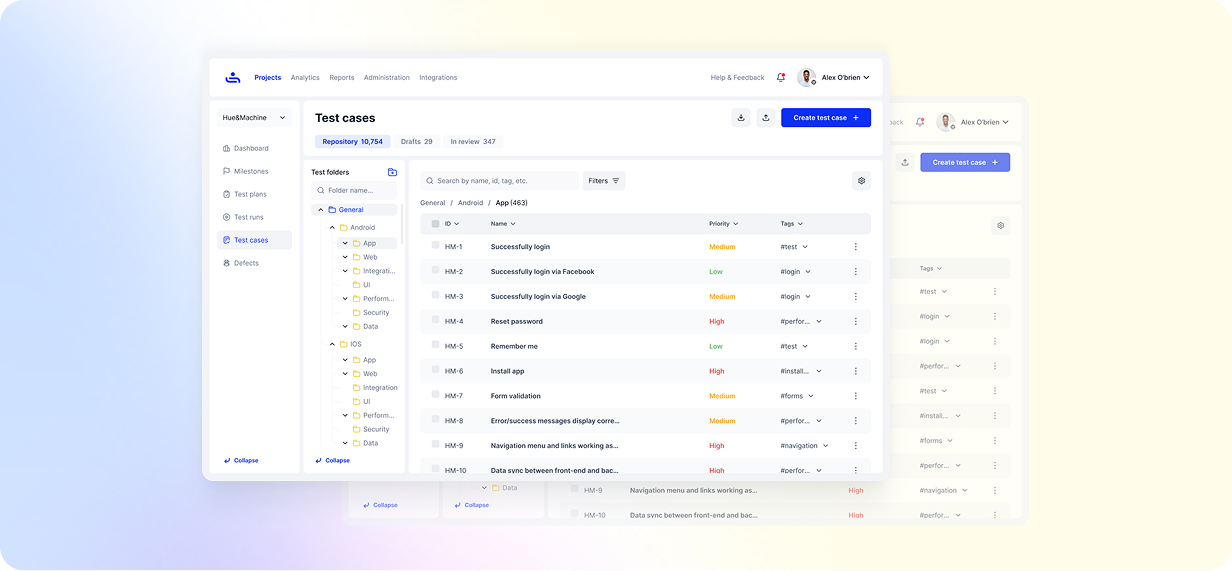
As you create more test cases, your repository grows, which requires organization to prevent chaos. A test management tool enables you to group related test cases into logical test suites based on application modules, user workflows, sprint cycles, or risk levels. This organization makes it easy to locate specific tests when needed, run the right subset for different situations, and keep everything manageable as your product evolves and changes over time.

Pro Tip: TestFiesta also enables custom tagging, which means you can assign a custom tag to any test case so it’s easier to find it later without having to look up the case by its specific technical name or applying multiple filters. 

Assign Test Cases

Once test cases are ready, the next step is to assign them to the right people. QA managers assign specific tests or test suites to team members based on their skills, availability, and workload. This might mean giving certain modules to testers who are well-versed in them, or spreading the workload evenly during busy release cycles. The point is: assigning test cases through a centralized platform makes it easier to collaborate with your team, track ownership, and monitor deadlines. 

Execute Tests

Execution is where you perform actual tests. In this phase, testers follow the documented steps for each test case and compare actual results against expected outcomes. Manual execution involves hands-on interaction with the application, while automated tests run through scripts in CI/CD pipelines. During execution, testers can record pass/fail status, capture screenshots or logs for failures, and note any deviations from expected behavior.

Log Bugs & Issues

Test management systems have a really good workflow when it comes to test cases that fail. When a test fails, you can create detailed defect reports in issue tracking systems like Jira, GitHub, and others. These reports include environment details, severity ratings, supporting evidence (like screenshots or error logs), and, most importantly, how to reproduce the logged bug. Each bug report is linked back to the specific test case that found it, which creates clear traceability between passed and failed cases. 

Track Progress

Image alt text: Screenshot of TestFiesta test management application – reporting dashboard.

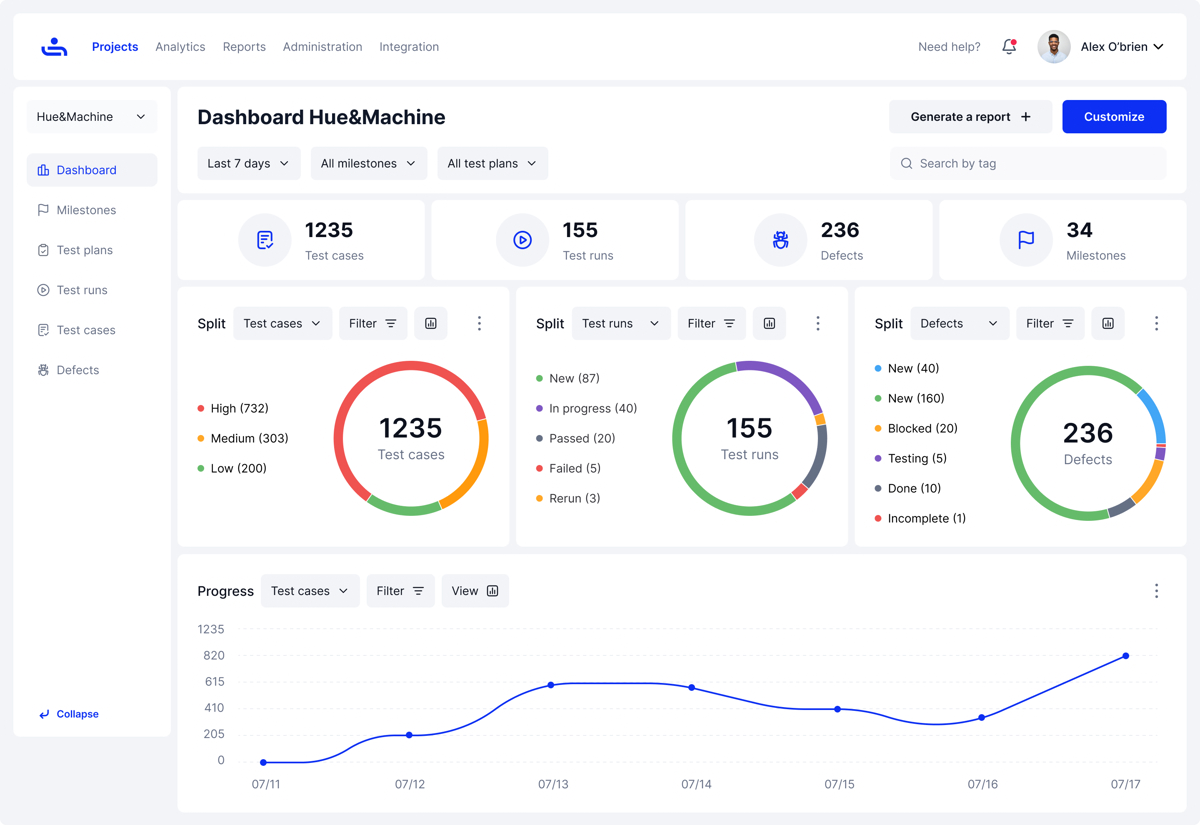
Clear visibility into your product’s testing status remains indispensable throughout the testing cycle. Some key metrics that you can monitor through a test management tool are test execution progress, pass/fail ratios, defect trends, coverage gaps, and testing speed.  Dashboards and reports also reveal bottlenecks, highlight high-risk areas with many failures, and show how far the product is on track for release. When you have a clear picture, resource allocation becomes an easier decision. 

Retest & Regression

After developers fix bugs, QA teams retest those specific scenarios to confirm the issues are actually resolved. But testing is like LEGO; fixing one thing can sometimes break another, which is where regression testing comes in. In regression testing, teams run broader test suites to make sure recent code changes haven't accidentally broken features that were working fine previously. This step keeps the usability of all features in check as your product gets ready for deployment.

Review & Optimize

Test cases aren't static documents; they require ongoing maintenance if you want them to support your evolving product. Regular reviews help identify outdated test cases that no longer match current functionality. When needed, teams can also perform optimizations, such as refining test case wording for clarity, updating test data, removing obsolete cases, and adding new ones for recent features. 

Generate Reports

Your testing data plays a big part in your resource allocation and future planning. Test management systems generate comprehensive reports and dashboards that show test coverage, execution trends, defect distribution, release readiness scores, and quality metrics. These reports serve different audiences: managers use them to gauge sprint health, executives get a high-level view of product quality, and teams can establish their testing credibility during audits or compliance checks. Customizable reporting gets each stakeholder the information they need to make decisions.

Benefits of Using a Test Case Management Tool

A test case management tool transforms how QA teams work by bringing structure, visibility, and efficiency to the testing process. Below is a more detailed overview of the key benefits of using a test case management tool.

Streamlines Test Execution and Tracking

A test case management app brings all testing activity into one place, removing the need to jump between multiple tools and Slack channels. Testers can run tests, log results, and keep an eye on the progress of the team; all without switching tabs. It cuts down on admin work and helps teams keep their testing flow steady.

Pro Tip: TestFiesta adds more flexibility to test management by simplifying your QA fiesta with custom fields and a user-friendly dashboard, getting the work done in far fewer clicks than most platforms. 

Reduces Human Error and Redundancy

When test cases are centralized and version-controlled, duplicate work is out of the window. Teams are far less likely to counter inconsistencies in test processes because they follow the same standardized cases, which reduces manual errors and reinforces consistency across the workflow.

Improves Communication and Collaboration

A test case management app gives everyone access to the same testing data. Testers can check each other’s assignments, developers can see the tested features, QA leads can track progress, and stakeholders can review reports without needing manual updates from the team.

Speeds Up Releases Through Better Visibility

QA leads hate it when they don’t have a release date on the horizon, and it’s worse for marketing. A prominent benefit of a test management tool is clear visibility into testing status. Teams can identify blockers early and address them before release. As a result, everyone knows what's ready and what still needs attention—and release timelines become more predictable.

Supports Agile and Continuous Testing Workflows

Agile teams need quick adaptation, and a good test management platform fits the bill. It makes it easier to update test cases, rerun tests, and track results across sprints, keeping the workflow on track without hurdles. 

How to Choose the Right Test Case Management System

Choosing the right test case management system depends on your team's size, workflow, and integration needs. Here's a step-by-step approach to evaluate and select the best tool:

Assess Your Testing Volume and Team Size

Start by understanding how many test cases your team manages on average and how many testers will use the system. You don’t need an exact number, but a ballpark helps you find the right match for your needs. Larger teams with extensive test suites need tools that can handle high volumes and provide strong access controls without breaking down. Smaller teams may prioritize simplicity and ease of use over advanced features.

Identify Required Integrations 

Review the tools your team already uses, including issue trackers, like Jira and GitHub, and automation frameworks. An ideal test case management system should integrate with these tools to avoid creating workflow gaps. If you’re choosing a platform for a startup, look for mainstream features that help you ease into testing without many obstacles. 

Check for Dashboard Analytics and Reporting Tools

Evaluate the reporting structure of a tool you want to use. The dashboard should display key metrics like test coverage, pass/fail rates, defect trends, and execution progress. A good tool should support flexible reporting that lets you customize views for different audiences, detailed metrics for QA leads, and high-level summaries for executives. The best tools make it easy to extract and share insights in multiple formats.

Compare Free vs. Paid Features

Many test case management tools offer free plans, which can be perfect for individual use or those trying things out. However, free tools often have limitations. Evaluate what's included and what's locked behind paywalls. Some tools limit essential features like integrations, custom workflows, advanced reporting, or user seats in their free versions. Review the feature breakdown carefully to determine whether a free plan genuinely meets your needs, or if upgrading is a valuable investment. 

Try a Free Trial/Free Account Before Committing

Before making a decision, use your free trial to test the tool with real test cases and workflows. Create a project, write a few test cases, execute a test run, and evaluate how intuitive the interface is. A hands-on experience will give you an actual lookout into the tool’s functionality. If you get the hang of the platform easily, it might be time to bring in your team with an upgrade.

Using TestFiesta for Test Case Management

Testing isn’t supposed to be a daunting task. Unlike traditional test management tools that force teams into rigid, one-size-fits-all workflows, TestFiesta gives you the flexibility to build a workflow that fits your team's needs. With customizable fields, flexible tagging, and configurable test structures, teams can organize and execute tests in a way that makes the most sense for their projects. 

TestFiesta supports integrations with Jira and GitHub, allowing testers to link defects directly to failed test cases. It also includes Fiestanaut AI, your personal copilot for AI-powered test case generation. You get shared steps for reusable test components and real-time collaboration tools that keep teams synchronized.

The best thing? TestFiesta offers a free plan for individual users with full feature access (no paywalls) and a flat-rate pricing model of $10 per user per month for organizations. No complex tires; just unwavering flexibility. Get started today. 

Conclusion

Test case management turns scattered testing efforts into an organized, scalable process that grows with your product. When evaluating test case management tools, prioritize factors that directly impact your team's efficiency, including integrations, reporting, and pricing. The smartest approach is to pick a tool that allows flexible management of test cases while simultaneously fostering collaboration—without clunky, rigid interfaces. TestFiesta offers a free plan with complete feature access and straightforward $10/user/month team pricing. Build failsafe products with modular test management. 

FAQs

What is test case management?

Test case management is the process of creating, organizing, and tracking test cases throughout the software testing lifecycle. QA teams get clearer visibility into test coverage, execution status, and defect tracking, harnessing releases with a more organized approach.

What is a test case management system?

A test case management system is software that facilitates test management. It helps teams create, execute, and monitor test cases in one centralized platform. A good system enables a smarter organization, simple execution, and efficient result tracking, without requiring you to switch tabs.

How is a free test case management system different from paid tools?

Free test case management systems typically offer basic functionality like test case creation, execution tracking, and simple reporting. Paid tools often include advanced features such as custom fields, automation integrations, detailed analytics, and priority support. TestFiesta provides full feature access in the free plan for individual users and charges a flat fee per user only for organizations.

What are the benefits of using a test case management app?

A test case management app streamlines test execution, reduces manual errors, and improves communication between QA, development, and stakeholders. A good test case management app provides better visibility into testing progress while supporting agile workflows. With a smart and flexible tool, teams can release software faster with higher quality.

How does a test case management dashboard help QA teams?

A test case management dashboard provides a real-time overview of testing activity, including test execution status, defect trends, and overall progress. It helps QA teams identify blockers, track completion, and make informed decisions about release readiness.

What is the price of a good test case management system?

TestFiesta offers a flat rate of $10 per user per month with no feature tiers or hidden costs. A free plan is also available for individual users.

Best practices

How to Write a Test Case (Step-By-Step Guide With Examples) 

Learn how to write test cases with this comprehensive guide. Follow our 7 steps to structure your tests, define outcomes, and catch software defects early.

October 18, 2025

8

min

Every great software release starts with great testing, and that begins with well-written test cases. Clear, structured test cases help QA teams validate functionality, catch bugs early, and keep the entire testing process focused and reliable. But writing great test cases takes more than just listing steps; it’s about creating documentation that’s easy to understand, consistent, and aligned with your testing goals. This guide will walk you through the exact steps to write a test case, with practical examples and proven techniques used by QA professionals to improve test coverage and overall software quality.

What Is a Test Case in Software Testing?

A test case is a documented set of conditions, steps, inputs, and expected results used to check that a specific feature or function in a software application works as it should.
In software testing, test cases form the backbone of every QA process. They help teams ensure complete coverage of each feature, stay organized, and maintain consistency across different releases. Without structured test cases, it becomes easy to miss defects or waste time retesting the same functionality.
In agile environments, where products evolve quickly and new builds roll out frequently, having clear and reusable test cases is a way to assess quality quickly before release. Test cases management allows software testers to validate updates with proven confidence and help QA teams maintain stability even as new features are introduced.
There are two ways you can create and conduct test cases:

Manual Test Cases

Manual test cases are created and executed by testers who manually follow each step and record the results. Manual testing is ideal for exploratory scenarios, usability assessments, and cases that rely on human judgment.

Automated Test Cases

Automated test cases are created using automation frameworks that automatically execute predefined test steps without needing manual input. Automation speeds up repetitive and regression testing, providing faster feedback and greater consistency. In most modern QA teams, both manual and automated test cases work together, balancing accuracy with efficiency to create high-quality, reliable products.

Why Writing Good Test Cases Matters

Writing good test cases comes down to clarity. When a test case is easy to read, anyone on the QA team can pick it up and know exactly what to do. It removes the confusion, keeps things consistent, and makes sure no key scenario gets missed.
Clear documentation also saves time in the long run. Teams can find bugs earlier, avoid repeating the same work, and stay focused on making sure the product works the way it should.
But when test cases are unclear, the whole process slows down. People interpret steps differently, things get missed, and problems show up later in production when they’re far more expensive to fix.

Essential Components of a Test Case

A well-structured test case includes several key elements that make it easy to understand, execute, and track. These components include:


Test Case ID: Each test case should have a unique identifier. This will help the QA team to organize, reference, and track test cases, especially when dealing with large test suites. 

Test Title: A good test title is short, descriptive, and makes it easy to see what the test is designed to verify.

Test Description: The description highlights the main goal of the test case. It explains which part of the software is being checked and gives a quick understanding of what the test aims to achieve.

Preconditions: Preconditions are conditions that must be met before the test can be executed. This may include setup steps, user permissions, or system states that ensure accurate results.

Test Steps: Test steps are a clear, step-by-step list of actions that testers need to follow to execute the test. Each step should be logical, sequential, and easy to understand to prevent confusion.

Expected Result: The expected result defines what should occur once the test steps are followed. It helps testers verify that the feature performs the way it’s meant to.

Actual Result: Actual result is the real outcome observed after running a test. Testers compare this with the expected result to determine if the test passes or fails.

Priority & Severity: Priority indicates how urgently a defect needs to be fixed, while severity describes how much the defect affects the system’s functionality.

Environment / Data: The environment and data used to run the test keep the results consistent and repeatable every time the test is executed.

Status (Pass/Fail): Reflects the outcome of the test. A Pass confirms that the feature worked as expected, while a Fail highlights an error that requires attention.

How to Write a Test Case (Step-by-Step Process)

The goal of a test case is to provide a straightforward, reliable guide that anyone from the QA team can use. Here’s a simple, structured process to help you write effective test cases that improve software quality and testing efficiency.

1. Review the Test Requirements

Every strong test case starts with a clear understanding of what needs to be tested. Begin by thoroughly reviewing the project requirements and user stories to understand the expected functionality. Identify the main goals, expected behavior, and any acceptance criteria that define success for that feature. 
At this stage, it’s important to think beyond what’s written. Consider how real users might interact with the feature and what could go wrong. Ask questions, clarify uncertainties, and make notes of possible edge cases, which are unusual or extreme scenarios, like entering very large numbers, leaving required fields blank, losing internet mid-action, or clicking a button multiple times, that help testers catch issues beyond the normal flow.
The better you understand the requirement, the easier it becomes to create focused, meaningful test cases that actually validate the right functionality.

2. Identify the Test Scenarios

After reviewing the requirements, the next step is to outline the main scenarios that describe how the user will interact with the feature. A test scenario gives a bird’s eye view of what needs to be tested; it’s the story behind your test cases.
Think of a test scenario as a specific situation you need to test to make sure a feature works properly. For example, if you’re testing a login page, one scenario could be a user logging in successfully with the correct credentials. Another could be a user entering the wrong password, or trying to log in with an account that’s been deactivated.


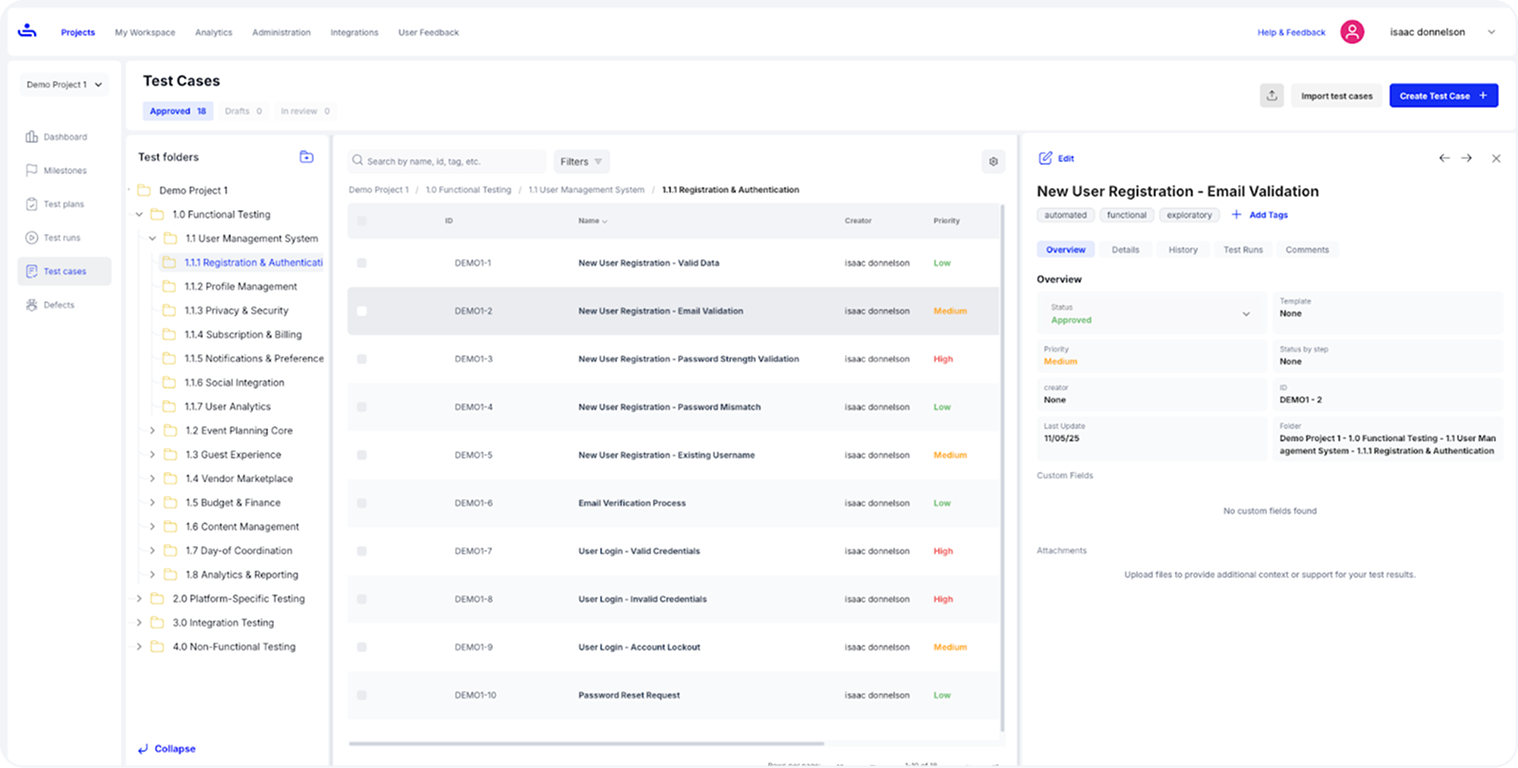
The image above shows how test cases are organized inside a project in TestFiesta, with folders on the left, a detailed list of cases in the center, and the selected test case opened on the right for quick review and editing.

3. Break Each Scenario into Smaller Test Cases

Once you’ve defined your main test scenarios, the next step is to break each one into smaller, focused test cases. Each test case should cover a specific condition, input, or variation of that scenario. Breaking test scenarios into cases confirms that you’re not just testing the “happy path,” but also checking how the system behaves in less common or error-prone situations.

4. Define Clear Preconditions and Test Data

Before you start testing, make sure everything needed for execution is properly set up. List any required conditions, configurations, or data that must be in place so the test runs smoothly. This preparation avoids unnecessary errors and keeps the results consistent. Documenting preconditions and test data also makes it easier to rerun tests in different environments without losing accuracy.

5. Write Detailed Test Steps and Expected Outcomes

After setting up your test environment, list the actions a tester should take to complete the test, step by step. Each step should be short, specific, and written in the exact order it needs to be performed. This makes your test case easy to follow, and anyone on the team can execute it correctly, even without a lot of prior context. Next, define the expected result, either for each step or as a single final outcome, depending on how your team structures test cases. This shows what should happen if the feature is working properly and serves as a clear reference when comparing actual outcomes.

6. Review Test Cases with Peers or QA Leads

Before finalizing your test cases, have them reviewed by another QA engineer or team lead. A second pair of eyes can catch missing steps, unclear instructions, or redundant cases that you might have overlooked. It’s important to maintain consistency across the QA team with regard to standards and the structure of a test, and peer-reviewing is a great way to do that. It gives you broader test coverage and a more unified approach among team members.

7. Maintain and Update Test Cases Regularly

Test cases aren’t meant to be written once and forgotten. As software evolves with new features, design updates, or bug fixes, your test cases need to evolve too. Regularly review and update your test documentation to keep it relevant and aligned with the latest product versions. 

Test Case Writing Example

To bring everything together, here’s a practical test case example that shows how to document each element clearly and effectively.
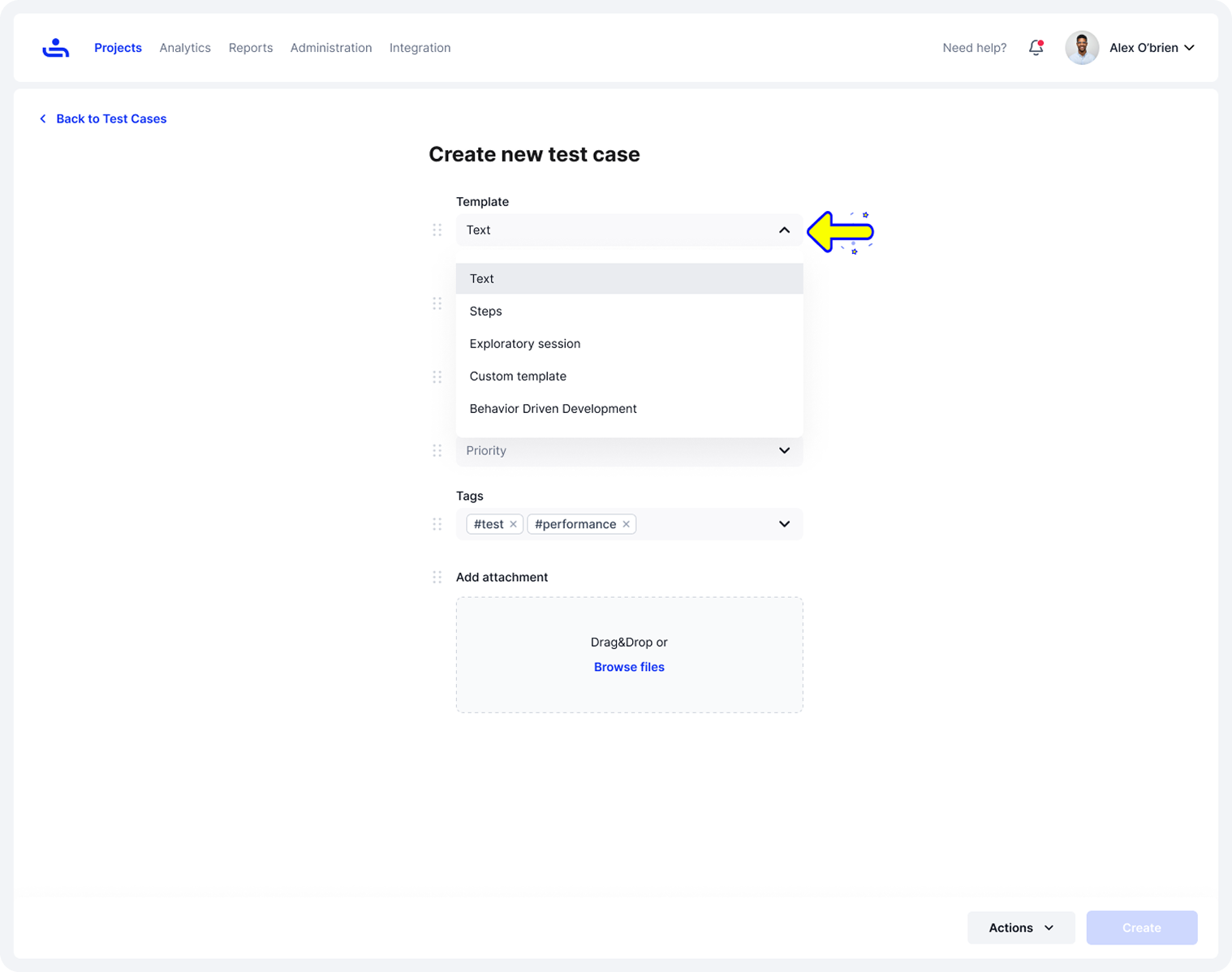
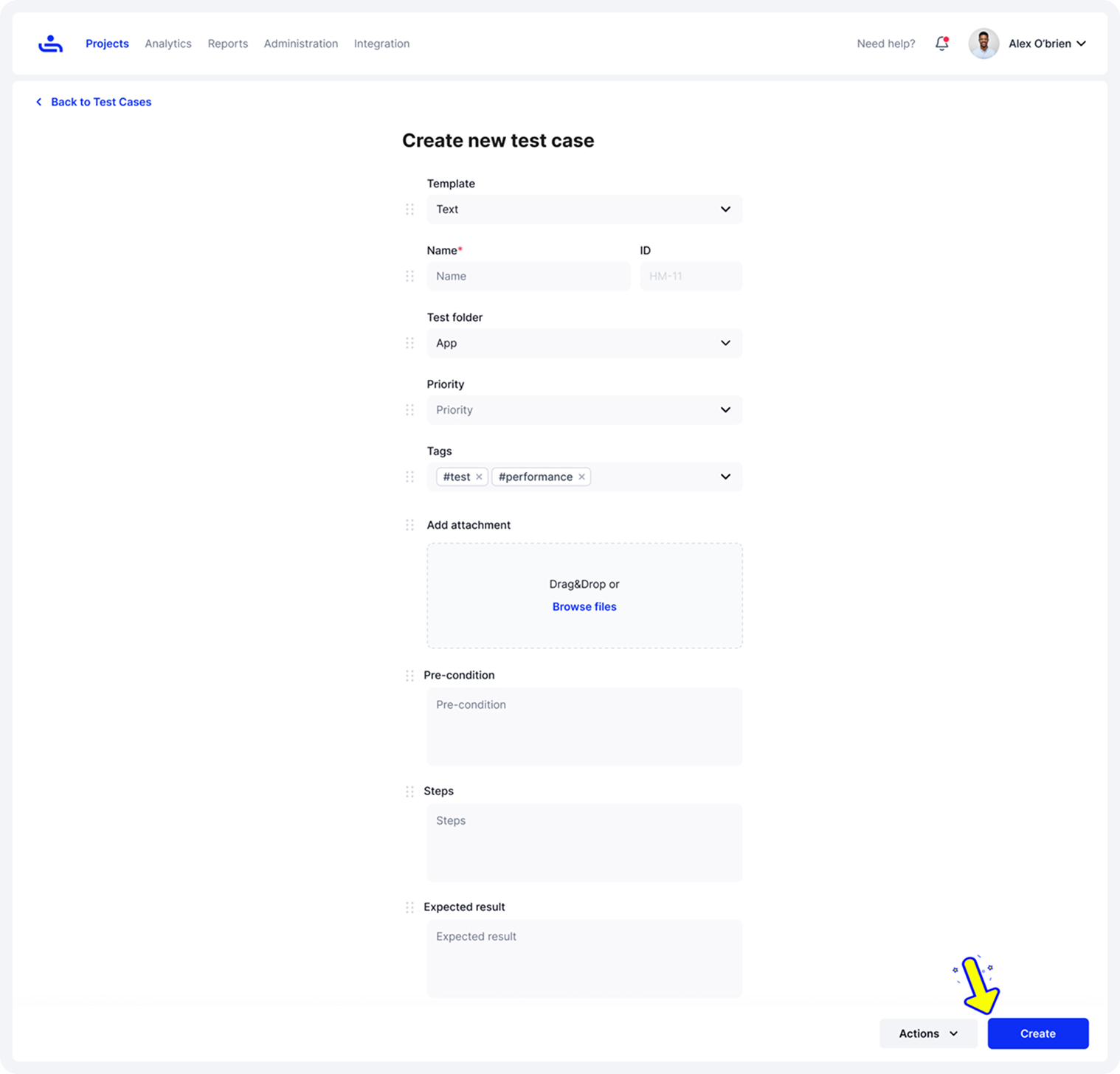
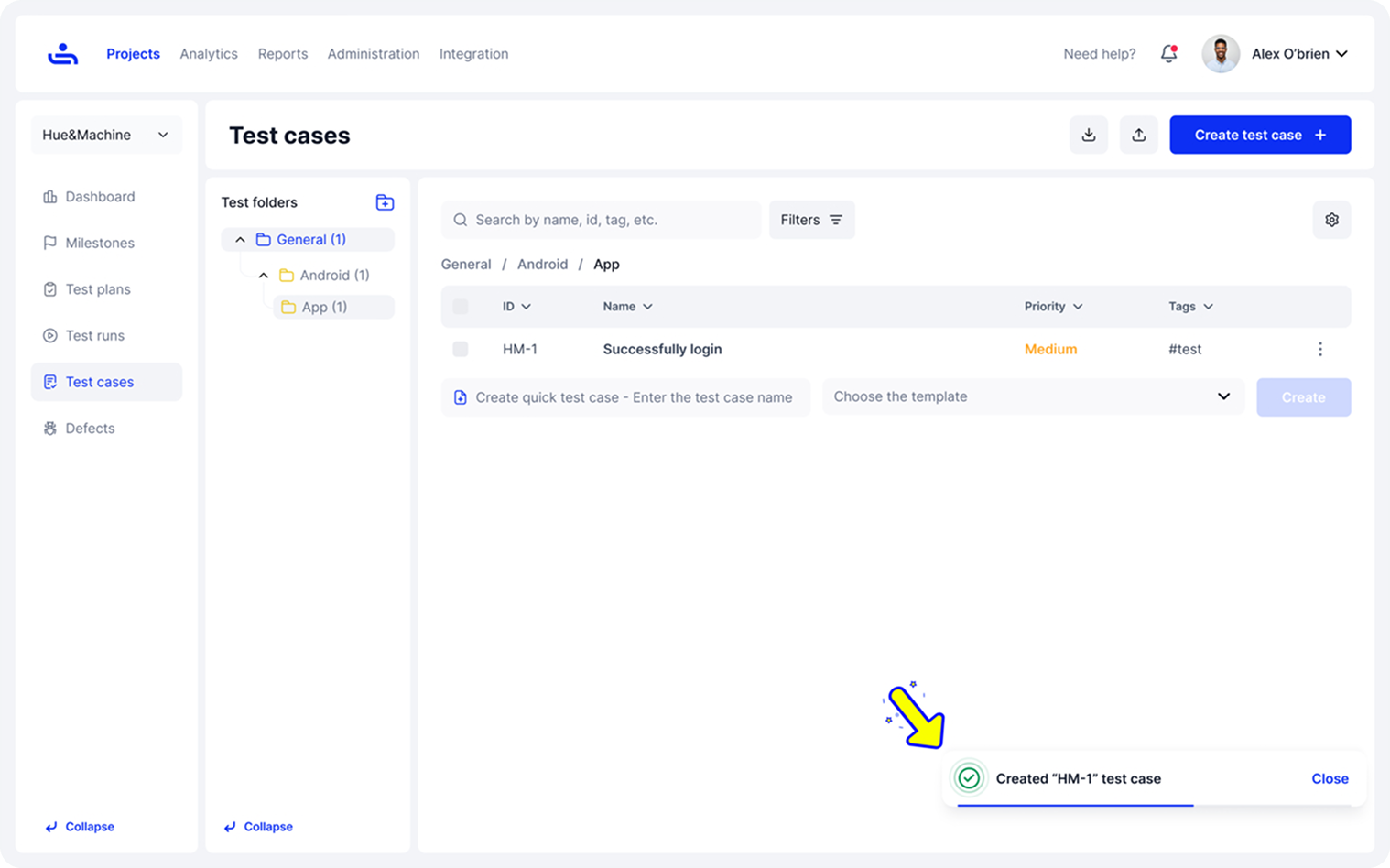
The screenshots below walk through a quick example of creating a new test case.


In the first step, you choose a template to start with. Templates are pre-built test case formats that give you a ready-made structure, so you don’t have to start from scratch.
Once the template is selected, you can fill in the details, name, folder, priority, tags, and any attachments. Attachments can include screenshots, design mockups, API contracts, sample data files, or requirement documents that give testers the context they need to run the test accurately.


After that, you move on to adding the key details, preconditions, expected results, steps, and any other information needed for the test. Everything is laid out clearly, so completing the form only takes a moment.
Once you hit Create, the new test case appears in your Once you hit Create, the new test case appears in your test case repository, along with a confirmation message. This repository is where all your test cases live, making it easy to browse, filter, and manage them as your suite grows. The process stays consistent whether you’re adding one test or building out an entire collection.


Best Practices for Writing Effective Test Cases

Writing test cases might seem routine for experts, but it’s what keeps QA organized and dependable. A well-written case greatly saves time and reduces confusion, which means you can put more effort into other things that require brainpower. 

Use simple, precise language: Keep your test cases clear and straightforward so anyone on the QA team can follow them without confusion. Avoid jargon and focus on clarity to make execution faster and more accurate.

Keep test cases independent: Each test should be able to run on its own without depending on the results of another. 

Focus on one objective per test: Make sure every test case checks a single function or behavior. This helps identify problems quickly and keeps debugging simple when a test fails.

Regularly review and update: As the software changes, review and update your test cases so they still reflect current functionality

Reuse and modularize where possible: If multiple tests share similar steps, create reusable components or templates. This saves time, promotes consistency, and makes updates easier in the long run. TestFiesta also supports Shared Steps, allowing you to define common actions once and reuse them across any number of test cases. This saves time, promotes consistency, and makes updates easier in the long run.

Common Mistakes to Avoid When Writing Test Cases

Even experienced QA teams can make small mistakes that lead to unclear or incomplete test coverage. Here are some common pitfalls to watch out for:

Ambiguous steps: Writing unclear or vague instructions makes it hard for testers to follow the test correctly. Each step should be specific, action-based, and easy to understand. Example: “Check the login page” is vague. Instead, use “Enter a valid email and password, then click Login.”

Missing preconditions: Skipping necessary setup details can cause confusion and inconsistent results. Always list the environment, data, or conditions required before running the test. For example, forgetting to mention that a test user must already exist or that the tester needs to be logged in before starting. 

Combining multiple objectives: Testing too many things in one case makes it difficult to identify what went wrong when a test fails. Keep each test focused on a single goal or function. For instance, a single test that covers login, updating a profile, and logging out should be split into separate tests.

Ignoring edge and negative cases: It’s easy to focus on the happy path and miss out on negative scenarios. Testing edge cases helps catch hidden bugs and makes your software reliable in all situations. Example: Not testing invalid input, empty fields, extremely large values, or actions performed with a poor internet connection.

Using TestFiesta to Write Test Cases

Creating and maintaining test cases can often be time-consuming, but TestFiesta is designed to make the process easier and more efficient than other platforms. TestFiesta helps QA teams save time, stay organized, and focus on actual testing instead of repetitive setup or documentation work.


AI-Powered Test Case Creation: TestFiesta’s on-demand AI helps generate test cases automatically based on a short prompt or requirement. It minimizes manual effort and speeds up preparation, giving testers more time to focus on execution and analysis.

Shared Steps to Eliminate Duplication: Common steps, such as logging in or navigating to a page, can be created once and reused across dozens of test cases. Any updates made to a shared step reflect everywhere it’s used, helping maintain consistency and save hours of editing.

Flexible Organization With Tags and Custom Fields: TestFiesta lets QA teams organize test cases in a flexible way. You can use folders and custom fields for structure, while flexible tags make it easy to categorize, filter, and report on test cases dynamically. This tagging system gives you far more control and visibility than the rigid folder setups used in most other tools.

Detailed Customization and Attachments: Testers can attach files, add sample data, or include custom fields in each test case to keep all relevant details in one place. This makes every test clear, complete, and ready to execute.

Smooth, End-To-End Workflow: TestFiesta keeps every step streamlined and fast. You move from creation to execution without unnecessary clicks, giving teams a clear, efficient workflow that helps them stay focused on testing, not the tool.

Transparent, Flat-Rate Pricing: It’s just $10 per user per month, and that includes everything. No locked features, no tiered plans, no “Pro” upgrades, and no extra charges for essentials like customer support. Unlike other tools that hide key features behind paywalls, TestFiesta gives you the full product at one simple, upfront price.

Free User Accounts: Anyone can sign up for free and access every feature individually. It’s the easiest way to experience the platform solo without friction or restrictions.

Instant, Painless Migration: You can bring your entire TestRail setup into TestFiesta in under 3 minutes. All the important pieces come with you: test cases and steps, project structure, milestones, plans and suites, execution history, custom fields, configurations, tags, categories, attachments, and even your custom defect integrations. 

Intelligent Support That’s Always There: With TestFiesta, you’re never left guessing. Fiestanaut, our AI-powered co-pilot, helps with quick questions and guidance, and the support team steps in when you need a real person. Help is always within reach, so your work keeps moving.

Final Thoughts

Learning how to write a test case effectively is one of the most impactful ways to improve software quality. Clear, well-structured test cases help QA teams catch issues early, stay organized, and gain confidence in every release. Although good documentation is crucial to keep everyone on the same page, well-written test cases make testing smoother, faster, and more consistent. The time you invest in learning how to write a test case pays off through shorter testing cycles, quicker feedback, and stronger collaboration between QA and development teams. TestFiesta makes it even easier to write a test case and manage your testing process with AI-powered test case generation, shared steps, and flexible organization. 

FAQs

What is test case writing?

Test case writing is the process of creating step-by-step instructions that help testers validate if a specific feature of an application works correctly. A written test case includes what needs to be tested, how to test it, and what result to expect.

How do I write test cases based on requirements?

To write test cases based on requirements, start by reading project requirements and user stories to have a better idea of what the feature needs to do. Identify main scenarios that need testing, both positive and negative ones. Write clear steps for each scenario, list any preconditions, and explain the expected result. Each test case should be mapped to a specific requirement to ensure full coverage and traceability.

How to write automation test cases?

Start by selecting test scenarios that are repetitive and time-consuming to run manually. Define clear steps, inputs, and expected results, then convert them into scripts using your chosen automation tool. Write your tests in a way that makes updates easy, avoid hard-coding values, keep steps focused on user actions (not UI details that may change), and structure them so they can be reused across similar features.

How to write a good test case?

A good test case is clear, focused, and easy to follow. It should have a defined objective, simple steps, accurate preconditions, and a clear expected result. Avoid ambiguity, keep one goal per test case, and make sure it can be repeated with the same outcome every time.

How to write a test case in manual testing?

To write a test case in manual testing, make notes that clearly explain what to test, how to test it, and what outcome is expected. Include any preconditions, such as login requirements or setup steps. Once executed, record the actual result and compare it with the expected result to determine whether the test passes or fails.

Looking to Join the

TestFiesta Revolution?

If you’ve ever felt let down by a tool you once loved,
If you’re tired of being sold to instead of supported, If you just want a damn good QA tool that respects you —
You’re invited.

Welcome to the fiesta!